Lancer Evolution V - Part 1 | Lancer Evolution V - Part 2 | Lancer Evolution V - Part 3 | Lancer Evolution V - Part 4 | Lancer Evolution V - Part 5 | Pictures | Mitsubishi Lancer RS GroupA Specs | Mitsubishi Lancer RS Specs | Carisma Evolution V Pictures | Drive Lancer Evolution VI Description - Part 1 | Mitsubishi Lancer Evolution VI Specs by Crazy 4 Cars Racing in Panama | Pictures - part 1 | Pictures - part 2 | Lancer Evolution VII Description - Part 1 | Lancer Evolution VII Description - Part 2 | Specifications |
![]()
|
Lancer Evolution V - Part 1 | Lancer Evolution V - Part 2 | Lancer Evolution V - Part 3 | Lancer Evolution V - Part 4 | Lancer Evolution V - Part 5 | Pictures | Mitsubishi Lancer RS GroupA Specs | Mitsubishi Lancer RS Specs | Carisma Evolution V Pictures | Drive Lancer Evolution VI Description - Part 1 | Mitsubishi Lancer Evolution VI Specs by Crazy 4 Cars Racing in Panama | Pictures - part 1 | Pictures - part 2 | Lancer Evolution VII Description - Part 1 | Lancer Evolution VII Description - Part 2 | Specifications | Mitsubishi Lancer Evolution V - Part 2Mitsubishi is a relative newcomer to the World Rally Championship but the company has already been extremely successful. It took a lot of enthusiasm and effort to bring the Lancer to its current version, the Evolution VI, the latest and most impressive incarnation of all street legal 4 wheel driven turbocharged cars. The company's first attempt at the WRC title was incarnated by the Mitsubishi Galant with some success in 1991 and 1992. The first Lancer to compete in the WRC appeared back in 1993 at the Monte Carlo Rally. It was then driven by Armin Schwarz and Kenneth Eriksson. This first version was soon to be followed by the Evolution II of the Lancer which made its debuts at the 1994 Monte Carlo Rally no longer than a year after the initial version was introduced. The celerity with which the next generation was introduced denotes both the determination of the Japanese company to be as competitive as possible very quickly as well as the seriousness of the involvement of Ralliart the company that is responsible for building the rally cars. Ralliart, an England based company, is run by Andrew Cowan. The Evolution II was driven by Kenneth Eriksson and Isolde Holderied. Next came the famous Lancer Evolution III which debuted at the Corsica Rally in 1995, a year and a half after the introduction of the Evolution II. This version (the evo III) is, to this date, a hard to beat contender in the GroupN class. The evo III was driven by Andrea Aghini at its debut rally.
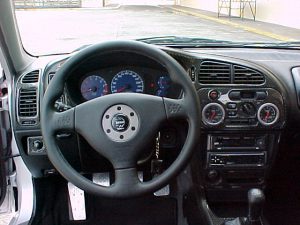
The Mitsubishi Lancer RS Evolution V *By the end of the 1995 season the FIA regulations authorized the WRC class cars to compete. Mitsubishi did not find any particular interest in this formula and continued to produce GroupA rally cars. The company's reply to WRC cars was the Lancer RS Evolution IV. This was an awesome car that contained some of the most bewildering technology ever to be available on sale on any manufacturer's catalogue. The evo IV was introduced at the 1997 Monte Carlo Rally, driven by Tommi Mäkinen and Richard Burns. After running alongside the WRC cars for almost a year and allowing Tommi Mäkinen to be the World Rally Champion, the Lancer Evolution IV was replaced by the Evolution V at the beginning of 1998. By then it was difficult to differentiate the Lancer Evo V from a WRC car. It had the same width as WRC cars had and some of the modifications applied to the Evo IV, in order to produce the evo V, clearly put the evo V in the WRC class. The Lancer Evo V was still a GroupA class car though which means that at least 2500 Evo V had to be produced in order to comply with the FIA rules. This was very good news for rally car amateurs since it meant they could, theoretically, buy a Lancer Evo V. The bad news was that all evo V cars were reserved to the Japanese market and although they could still be purchased from other countries this could only be done through personal import channels. Personal import procedures are very dependent upon the country of import and span from easy to impossible passing from complex and extremely expensive. For your convenience here's a brief table resuming the basic specs of the different commercial Lancer Evolution models:
*: pictures are courtesy of the Mitsubishi Motors Corporation in Japan Copyright © 1996-2010 Tryphon Georgallides. All rights reserved. | Disclaimer | Web Design by Odile Georgallides-Scheurer |
![]()