Report on the 2000 Acropolis WRC rally
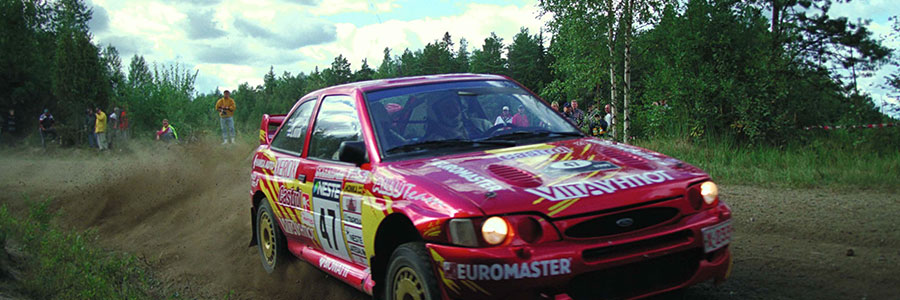
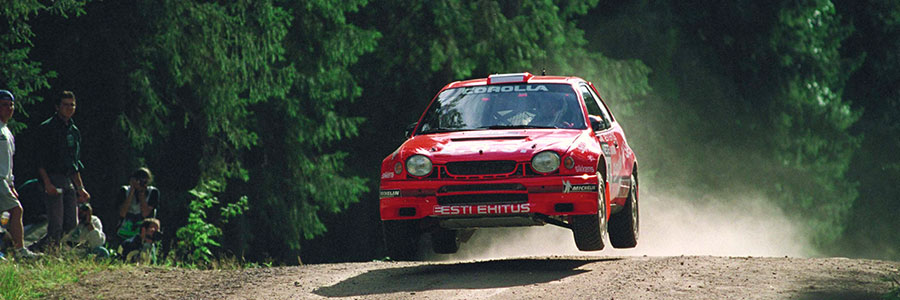
Welcome to our report on the 2000 Acropolis rally. Just like in the past, with our report on the 1999 Finnish rally, the purpose of these few pages is to attempt to give you an overview of what a World Rally Championship rally is all about, from a spectator's point of view, and hopefully allow you to feel as if you had been there yourself. You may skip the comments and go directly to the pictures page by clicking here if you wish. All the pictures were shot on a Minolta Dynax 9 equipped with the VC-9 grip and either a 80-200mm F2.8, a 28-70mm F2.8 Minolta G zoom or a 20mm F2.8 Minolta G fixed lens. I used Fuji Superia 100 ASA negative film and Fuji Velvia 50 ASA reversible film. We planned our trip to the Acropolis around February as the event was to take place, in June 2000, you always have to plan early if you wish to assist to any WRC event. Hotel rooms and accommodation are hard or even impossible to find if you plan too late. During the months that preceded the event we carefully went through the rally's course and special stage plans in order to select the ones we'd like to see. The event was composed of 19 special stages and you can easily imagine it is impossible to see them all. Playing it safe we selected 4 of the special stages, spread along the three days of the event, namely SS3 Thiva, SS7 Mendenitsa I, SS8 Palaiohori-Eleftherohori and SS13 Pavliani I which we wished to attend and shoot the pictures you'll find in the next pages. Like all WRC events the Greek one complies to the FIA wish that all events start from the same location, in this case Itea, each one of the three days of competition. We arrived at Kamena Vourla, a sea-side resort, on June the 6th. We took the opportunity of being 3 days early and went out to check the access roads to the special stages we had selected to attend. It is extremely important that you verify that you have indeed access to each of the special stages you wish to attend to. Once you access the SS course try to find a nice spot quite into the stage, especially one far away from the roads that provide access to the special stage. The reason is that WRC rallies are always extremely crowded. Finding a nice spot away from the crowds will allow you to enjoy the rally far more than if you are located among thousands of other spectators, why, well spectators tend to avoid walking long distances into the special stages and if you do you will avoid the crowds. The Acropolis is special in that the roads used to race are so rough that very few cars make it through the event. The event is as rough on the cars as it is on the drivers (heat and bumpy roads) and the spectators who have to stand the heat and the enormous amounts of dust and gravel projected by the cars. It is important that if you wish to attend this event and want to see the World Rally Championship's top drivers you select one of the very early stages. Otherwise most of the cars might have retired by the time the event gets into its last 2 days. On this year's event Freddy Loix, Tommi Mäkinen, Alister McRae, Markko Martin, Krzysztof Holowczyc, Kenneth Eriksson and Luis Climent had all retired by the end of day1! On June the 9th the we attended SS3 Thiva. Access to the stage was very easy even for those who got there late (30 minutes before the first car was due). We where located just after the point marked "2" on the map below where the green star is.
Special Stage 3 Thiva We were lucky enough to witness many exciting events during the stage:
Special stage 3 was won by Colin McRae with a time of 16:23.1 (avg. speed 73.68 km/h), 4.5 seconds in front of teammate Carlos Sainz. Richard Burns was third 13.6 seconds behind and Juha Kankkunen fourth 14.1 seconds behind. Note that Colin's time on this stage was 13.1 seconds slower than the stage's fastest time established by Richard Burns in 1999 (16:10.0). All the pictures shot during this stage are here. At the end of day 1 the overall standings were:
©Copyright
1996-2008 Tryphon Georgallides, all rights reserved; |